
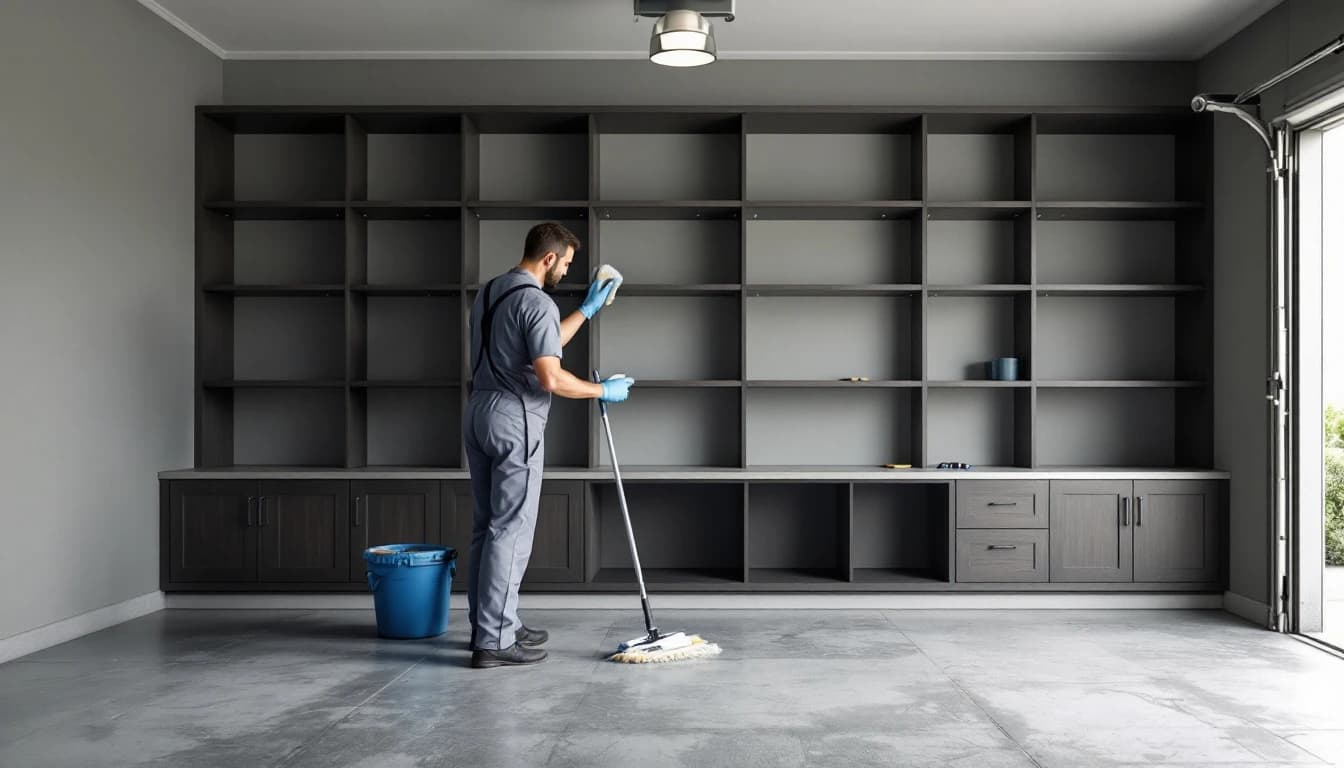
2026 Dalworthington Gardens, TX move-out cleaning guide: $200-$500 flat rate and the garages, workshops, sheds and storage rooms standard checklists skip
Dalworthington Gardens does not look like the rest of inner Tarrant County, and the reason is in the name. The place was platted in the 1930s as a New Deal garden-homestead community - the idea being that a household should have enough land to grow food and keep a workshop, not just a lawn. Ninety years later the gardens are mostly gone but the lots are still there, and they are unusually large for a city that is completely surrounded by Arlington.
Large lots produce buildings. Detached workshops. Sheds at the back fence. Oversized two-and-a-half car garages with built-in shelving somebody added in 1978. Storage rooms off the carport. A greenhouse frame nobody has used in a decade. If you have lived here, you have almost certainly used at least one of those spaces to hold things you did not want in the house.
As of August 2026, a move-out clean is $200 to $500 as a flat rate quoted before the job starts. This guide is not a room-by-room walkthrough of the house - plenty of those exist, including our own move-out checklist and cost guide. This one is about the part of a Dalworthington Gardens property that standard checklists ignore entirely, and where a surprising share of the deduction risk actually lives.
Why Move-Out Checklists Stop at the Back Door
Almost every move-out checklist in circulation was written for an apartment. Apartments have a kitchen, bathrooms, bedrooms, a living area, and possibly a balcony. That is the whole universe, so that is the whole checklist, and those checklists then get reprinted for houses without anyone reconsidering the boundaries.
Meanwhile the lease you signed almost certainly covers the entire premises, not the conditioned square footage. The garage is part of the premises. The shed is part of the premises. So is the concrete pad it sits on and whatever is stacked against the back of it. A landlord doing a walkthrough on a large lot will absolutely open the shed door, and the fact that your checklist did not mention it is not a defense.
There is also a plain economics reason these spaces matter more than the equivalent square footage inside. Cleaning a bedroom is labor. Dealing with a shed somebody left full of half-used paint, a broken mower, and three bags of hardened concrete mix is labor plus disposal, and disposal is what turns a modest cleaning line item into a real charge against a deposit. The cost of removing things is almost always higher than the cost of cleaning things.
What Returned Clean Actually Means, Space by Space
The standard in a lease is generally that you return the property in the condition you received it, less normal wear and tear. That is easy to picture for a living room and much harder to picture for a workshop. Here is the practical translation for each kind of space these lots tend to have.
| Space | What tenants typically leave | What returned clean actually means |
|---|---|---|
| Attached or oversized garage | Paint cans, oil drips, lumber offcuts, a spare tire, shelving contents | Completely emptied of your property, floor swept and degreased where drips exist, shelves and ledges wiped, cobwebs cleared from corners and the door track, garage door tracks and opener rail free of dust |
| Detached workshop | Bench debris, sawdust, jars of fasteners, wall-mounted hooks and pegboard fittings | Emptied, swept including under the bench, sawdust cleared from ledges and window sills, anything you mounted either removed with the holes reported or left in place if the landlord agreed in writing |
| Storage shed | Lawn chemicals, fertilizer, pots, hoses, bags of soil, old fencing | Emptied down to bare floor, swept, no chemical containers left, shelving wiped, and any spilled granular product cleared rather than swept into the corner |
| Storage room or utility closet | Filters, paint touch-up cans, holiday bins, the previous tenants leftovers | Emptied, shelves wiped, floor cleaned, and the water heater or equipment area clear of stored items so it can be inspected |
| Carport or covered pad | Oil stains, leaves, potting soil, a grill | Cleared, swept, and stains addressed where they are yours rather than pre-existing |
| Attic over the garage | Boxes, a mattress, a Christmas tree box, insulation disturbed by storage | Completely emptied, hatch and pull-down stairs clear and operable, no items resting on ductwork or wiring |
The pattern in the right-hand column is the same every time: emptied first, cleaned second. Cleaning is quick. Emptying is what people underestimate, and it is the only part you cannot do the morning of.
The Garage Floor Is the One That Costs Money
Of everything above, an oil-stained concrete floor is the item most likely to turn into an actual dollar deduction, because it is visible from the doorway, it photographs badly, and it is unambiguously attributable to a vehicle rather than to the passage of time.
Some useful distinctions before you panic about it:
A stain that predates you is not yours. This is the single best argument available and it depends entirely on documentation. If you photographed the garage floor at move-in, you have already won this conversation. If you did not, look for the move-in condition form - garage floor condition is sometimes noted on it, and a landlord who wrote nothing has a harder time claiming the floor was spotless when you arrived.
A fresh drip and a two-year-old stain behave differently. Concrete is porous. A drip cleaned within a day or two often lifts almost completely; a stain that has been soaking in through a couple of North Texas summers has migrated into the slab and no amount of scrubbing brings the color all the way back. That is worth knowing in advance so your expectations for the result are realistic, and so you address any drips during your tenancy rather than at the end of it.
Degreasing and resurfacing are different jobs. A move-out clean degreases and removes surface residue so the floor is clean and not slick. It is not a concrete restoration service, and nobody should promise you the slab will look new. What it does do is remove the argument that the space was left dirty, which is the argument you actually need to win.
If the floor is bad enough that you are worried, raise it with the landlord before the walkthrough rather than hoping it goes unnoticed. A pre-emptive conversation about a stain you already photographed and already addressed lands very differently than a defensive one after a deduction letter arrives.
Leftover Paint, Solvent, and Yard Chemicals
The second reliable cost driver out back is chemical storage, and it is worth handling deliberately because you cannot simply put most of it in the bin on the way out.
Sheds and workshops on these lots accumulate paint, stain, thinner, motor oil, pesticide, fertilizer, pool chemicals, and old fuel. Some of that is household hazardous waste and requires a collection point rather than curbside disposal - the EPA maintains a general overview of household hazardous waste and why it is handled separately. Check what collection options your city and county offer, because the answer varies and because those programs frequently run on limited schedules that will not accommodate a two-day notice.
Two practical notes. First, a cleaning crew cannot take hazardous materials away for you - no cleaning company can, and anyone who says otherwise is doing something you do not want your name attached to. Second, this is precisely why the outbuildings need to be handled two weeks out and not on moving day. Disposal has a calendar. Cleaning does not.
An easy sequence that works: two weekends before the move, empty the shed and the workshop completely and sort what is left into keep, donate, trash, and hazardous. Handle the hazardous pile that same weekend while you still have a vehicle, a free Saturday, and time to find out that a collection site is only open on the third one. Then the actual cleaning of those spaces is a fast, uncomplicated job at the end.
What This Means for Scheduling and Scope
For a property with real outbuildings, tell us about them when you call rather than at the door. It changes the quote and, more importantly, it changes the time allotted. A four-bedroom house with a detached workshop and a shed is not the same job as a four-bedroom house on a quarter-acre lot, and both of those are quoted inside the same $200 to $500 flat-rate range but land in different parts of it.
What we need to quote it: bedrooms, full and half baths, approximate square footage, and then a plain list of the outbuildings - garage and whether it is attached, shed, workshop, storage room, carport, garage attic. And confirmation of the thing that matters more than all of it: that every one of those spaces will be completely empty when we arrive. Cleaning around a stack of boxes in a shed is not cleaning the shed.
If the house itself also needs more than a standard turnover - long-vacant, heavy build-up, a kitchen that has not been detailed in years - our deep cleaning service is the scope that covers that, and the move-in/move-out service page sets out the standard turnover scope for the interior.
Booking a Dalworthington Gardens Move-Out
Call (682) 201-2909 or email info@lauramaidservices.com with your bedroom and bathroom count, rough square footage, your list of outbuildings, and your walkthrough date. What comes back is a single flat rate inside the $200 to $500 range, agreed before anyone starts work - not an hourly meter that produces a number at the end, and not a call-for-pricing runaround that leaves you unable to compare two companies during the week you have the least time to spend on it.
Laura Maid Services has cleaned across DFW since 2003, we are insured and bonded, and every cleaner is background-checked, which matters on a job that regularly happens at an empty property with nobody on site.
Start from the Dalworthington Gardens cleaning services hub or go straight to the Dalworthington Gardens move-in/out page. If your move is taking you to a larger lot elsewhere in the area, we also cover Kennedale and Mansfield move-in/out cleaning, and the Mansfield deposit guide covers that market in detail.
Frequently Asked Questions
Is the garage really part of a move-out inspection?
Yes. Your lease almost always covers the entire premises rather than just the conditioned square footage, so the garage, shed, workshop, carport, and garage attic are all fair game at a walkthrough. On the large lots common in Dalworthington Gardens, a landlord will open the shed door - and a checklist that never mentioned it is not a defense.
Can a landlord charge me for oil stains on the garage floor?
They can attempt to, and whether it sticks depends on documentation and on whether the stain is genuinely yours. Move-in photos or a condition form noting the floor is the strongest evidence available. A move-out clean degreases the slab and removes surface residue, but concrete is porous and a stain that has soaked in over two summers will not come back to new - which is why fresh drips should be addressed as they happen.
What do I do with leftover paint and lawn chemicals?
They generally cannot go in the household bin. Paint, solvent, motor oil, pesticide, and pool chemicals are typically household hazardous waste and need a collection point, and those programs often run on limited schedules. Handle that pile two weekends before your move rather than on moving day, because disposal has a calendar and cleaning does not.
Does a detached workshop or shed change the price?
It can move where the job lands inside the $200 to $500 flat-rate range, because outbuildings add real square footage and real detail work. Tell us about them when you call rather than when we arrive - it affects both the quote and the time allotted, and a surprise workshop at the door is the fastest way to a job that does not fit the day.
Will the cleaners haul away what I leave behind?
No. A move-out clean assumes every space is completely empty when the crew arrives, including the shed and the garage attic, and no cleaning company can legally remove hazardous materials for you. Emptying is the part that takes planning; once a space is bare, cleaning it is quick.
How far in advance should I start on the outbuildings?
About two weeks. Empty the shed and workshop completely on a weekend, sort into keep, donate, trash, and hazardous, then deal with the hazardous items while you still have a free Saturday and a vehicle. That leaves the actual cleaning as a short, straightforward job in the final week instead of a crisis on moving day.